
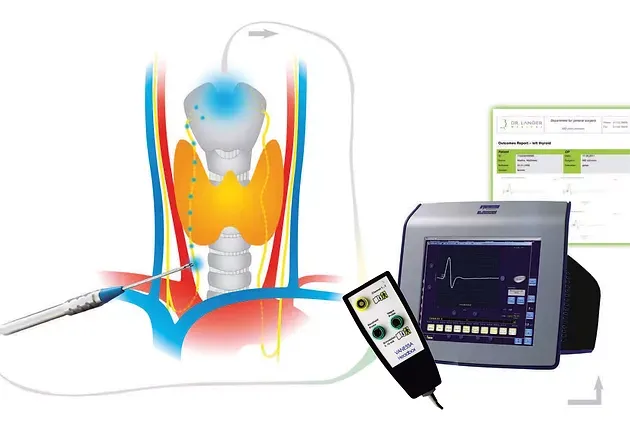
The thyroid is a butterfly-shaped gland at the front of the neck that produces hormones regulating metabolism. For the surgical treatment of thyroid and parathyroid diseases, we perform safe, voice-preserving thyroid surgery with nerve monitoring to protect the nerves that move the vocal cords.
When is thyroid surgery needed?
- Thyroid nodules: nodules with suspected or confirmed cancer on fine-needle biopsy, nodules that grow quickly, or nodules that cause symptoms because of their size
- Multinodular goitre: an enlarged thyroid causing neck swelling or difficulty swallowing or breathing
- Hyperactive nodules (toxic goitre): nodules that overproduce hormone and cannot be controlled with medication
- Thyroid cancer: confirmed or strongly suspected
- Parathyroid adenoma: a benign parathyroid growth that raises blood calcium and can lead to bone loss or kidney stones
Symptoms
Thyroid disease often causes no symptoms and is found during a routine examination or on imaging done for another reason. Some patients notice a neck swelling, a feeling of something stuck when swallowing, hoarseness or shortness of breath. Excess hormone can cause palpitations, weight loss, sweating and tremor; parathyroid disease can cause fatigue, bone pain and kidney stones.
Diagnosis
Alongside the examination, diagnosis uses:
- Blood tests for thyroid hormones, calcium and parathyroid hormone
- Neck ultrasound to assess the size and features of nodules
- Ultrasound-guided fine-needle aspiration biopsy of suspicious nodules
- Thyroid scintigraphy or parathyroid imaging when needed
Results are reviewed together with endocrinology and radiology colleagues, and the decision to operate is made individually for every patient.
How is the operation performed?
Thyroid surgery is done under general anaesthetic through a small incision in a natural skin crease at the base of the neck. Depending on the disease, half of the thyroid (lobectomy) or the whole gland (total thyroidectomy) is removed. For a parathyroid adenoma, only the diseased gland is removed.
Throughout the operation, nerve monitoring continuously checks the nerve that moves the vocal cords (the recurrent laryngeal nerve). This helps locate and protect the nerve. Care is also taken to preserve the parathyroid glands, which control calcium levels.
Recovery after surgery
- Most patients go home the day after surgery.
- A mild sore throat and discomfort when swallowing settle within a few days.
- Most people return to everyday activities within a week.
- The scar fades over time in the natural neck crease.
- If the whole thyroid is removed, thyroid hormone tablets are started and the dose is adjusted with blood tests.
- If cancer is found, further treatment (such as radioactive iodine) is planned with the relevant specialists based on the pathology result.
Follow-up visits after surgery are important to make sure recovery is completed safely.
Frequently asked questions
Will my voice change after thyroid surgery?
The nerves to the vocal cords are monitored continuously during surgery, which helps protect them. A slight change in your voice for a few days is possible; permanent hoarseness is rare.
Will I need medication after thyroid surgery?
If the whole thyroid is removed, you take thyroid hormone (levothyroxine) for life. If half is removed, the remaining tissue often makes enough hormone; this is decided from follow-up blood tests.
How long will I stay in hospital?
Most patients go home the day after surgery. Daily activities are usually resumed within a week, and heavy physical work after a few weeks.
Does every thyroid nodule need surgery?
No. Most nodules are benign and are monitored with ultrasound. Surgery is recommended for suspected or confirmed cancer, pressure symptoms, rapid growth or nodules that overproduce hormone.
The information on this website is for general information only and does not replace an examination or medical advice. Please consult your doctor for diagnosis and treatment.