
Procedures
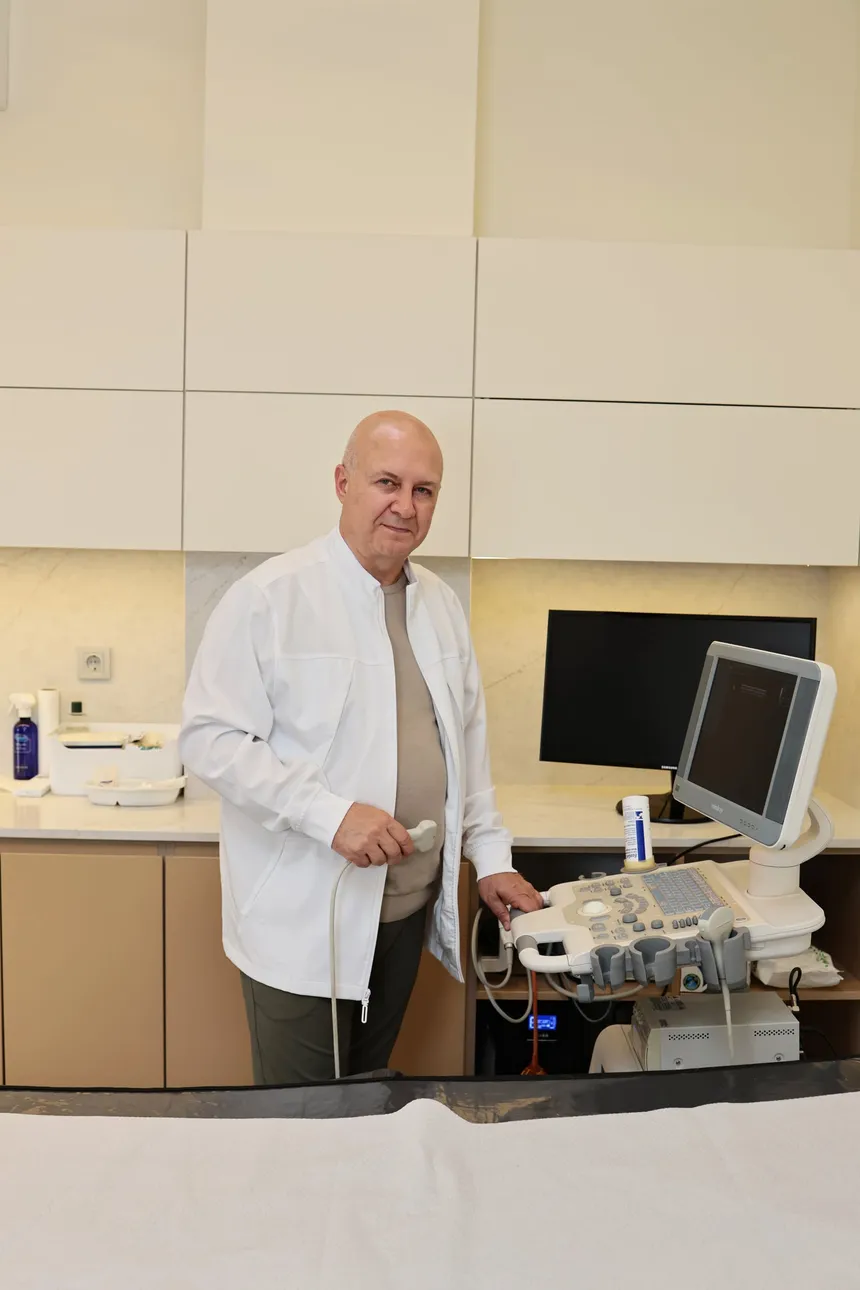
- Breast examination and ultrasound
- Diagnosis and treatment of breast diseases
- Breast biopsy
- Genetic counselling and risk assessment
- Breast surgery
- Oncoplastic breast surgery
- Breast- and arm-conserving surgery
- Axillary lymph node surgery
- Breast reduction surgery
- Breast filler
- Risk-reducing breast surgery
- Gynaecomastia (male breast enlargement) surgery
Breast lumps are diagnosed by combining a breast surgeon’s examination, imaging (ultrasound, mammography and, when needed, MRI) and a breast biopsy. We plan your diagnosis and treatment within this triple assessment, working with experienced colleagues. We discuss all treatment options with you and aim for treatments that preserve the breast wherever possible.
We also treat benign but difficult conditions such as granulomatous mastitis. We perform ultrasound-guided core needle biopsies, and when a lump is removed we take care to preserve the appearance of the breast or correct existing problems. Patients who need a breast cancer risk assessment or genetic counselling are informed and followed up annually.
Breast-conserving surgery
Breast-conserving surgery removes breast cancer with macroscopically and microscopically clear (negative) surgical margins. It is also called lumpectomy, wide local excision, partial mastectomy, segmental resection or quadrantectomy.
In breast-conserving therapy, surgery is followed by radiotherapy to eliminate any microscopic residual disease. It is an alternative to mastectomy in early-stage breast cancer. The goals are survival equivalent to mastectomy, a good-looking breast and a low recurrence rate in the treated breast.
There is no difference in survival between breast-conserving therapy and removal of the whole breast. Its advantage is a better cosmetic and psychological outcome. The disadvantage is a slightly higher risk of the tumour recurring in the remaining breast tissue; if it does, the usual treatment is mastectomy. A local recurrence does not reduce survival.
Types of breast-conserving surgery
- Lumpectomy: removal of the lesion with the overlying skin and wide margins (≥1 cm) down to the underlying fascia.
- Tumourectomy / wide local excision: removal of the whole lesion only; the skin and fascia do not need to be removed.
- Quadrantectomy: removal of the breast quadrant containing the tumour, with a 2–3 cm margin, the skin and the underlying fascia. The risk of positive margins is low, but the cosmetic result is poorer.
Patient selection
Breast-conserving surgery is a good alternative to mastectomy but is not suitable for every patient. Choosing the right patients is key to its success. Most contraindications relate to being unable to achieve clear margins or to tolerate radiotherapy.
Oncoplastic breast surgery
Oncoplastic surgery combines safe removal of the tumour with plastic-surgery techniques to preserve the shape of the breast. Prof. Dr. Hedef Özgün received his oncoplastic breast surgery certificate in Düsseldorf in 2014; breast reduction and implant (silicone prosthesis) procedures are also performed.
Frequently asked questions
Is breast-conserving surgery as safe as mastectomy?
In suitable patients, breast-conserving surgery followed by radiotherapy offers the same survival as removing the whole breast, with better cosmetic and psychological results. Which option suits you is decided after examination and tests.
How is a breast biopsy performed?
Lumps are diagnosed with an ultrasound-guided core needle biopsy. It is done under local anaesthetic in the clinic, and most patients return to normal activities the same day.
Can I find out my breast cancer risk?
Your personal risk is assessed from your family history and other risk factors. Patients who need it are referred for genetic counselling, and annual follow-ups are planned.
The information on this website is for general information only and does not replace an examination or medical advice. Please consult your doctor for diagnosis and treatment.