
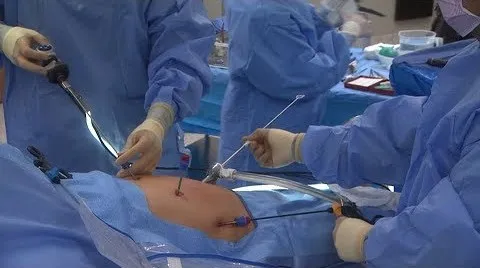
In diagnosing and treating diseases of the large bowel (colon and rectum), we focus on early diagnosis and on the patient’s quality of life.
Procedures we perform
- Colorectal cancer surgery
- Colon surgery
- Colostomy closure
- Capsule endoscopy to find digestive bleeding that could not be diagnosed otherwise
- Diagnosis of small bowel diseases
Colorectal cancer
Colorectal cancer is the most common cancer of the digestive system. For early diagnosis, people without any symptoms should also have a colonoscopy from age 45. If no problem is found, a colonoscopy every 10 years is enough. If a polyp is found, it should be checked every 2–3 years depending on the type.
Symptoms
- Alternating periods of constipation and diarrhoea
- Bleeding from the rectum or blood in the stool
- Hidden (occult) blood in the stool
- Iron-deficiency anaemia with no other cause
- Abdominal bloating and trapped wind
Treatment for inflammatory bowel disease for more than ten years and finding many polyps in the colon also increase the risk. Because these symptoms can be confused with hemorrhoids, everyone with rectal bleeding should be assessed.
Capsule endoscopy
In capsule endoscopy, a swallowed camera capsule takes images of the small intestine. It is used for:
- Inflammatory bowel disease (diagnosis and follow-up of Crohn’s disease) – when endoscopy and other imaging have not given a diagnosis and there is no bowel obstruction
- Hidden digestive bleeding and chronic anaemia
- Polyposis syndromes
- Coeliac disease, malabsorption and growth delay in children
Frequently asked questions
At what age should I start colonoscopy screening?
People without symptoms are advised to have a colonoscopy from age 45. If no problem is found, repeating it every 10 years is enough; if polyps are found, a check every 2–3 years is needed depending on the type. People with a family history of bowel cancer may start earlier.
What is capsule endoscopy?
You swallow a pill-sized capsule with a camera that takes pictures of the small intestine. It is used to find bleeding and disease in areas that gastroscopy and colonoscopy cannot reach.
The information on this website is for general information only and does not replace an examination or medical advice. Please consult your doctor for diagnosis and treatment.